8 min read
2026-05-12
A practical guide for clinics on issuing patient refund checks including verification, approval workflow, payee details, and a faster digital alternative.
Sending patient refund checks is one of those quiet administrative tasks that rarely makes it into clinic training manuals, until something goes wrong. A check made out to the wrong person, a refund issued before insurance reconciled, a payment that bounces back six months later marked "address unknown." Each of these is fixable, but each one costs time, erodes patient trust, and creates a paper trail nobody wants to explain later.
If your clinic still issues checks for patient refunds, and most do, at least some of the time, here's how to make the process tight, defensible, and patient-friendly. And at the end, we'll show you how to skip the paper checkbook entirely.
Verify the Credit Balance Before Issuing a Refund
The single biggest source of refund problems is issuing one too soon. A credit balance on a patient ledger isn't automatically a refund. It might be a pending insurance adjustment, a duplicated payment posting, or a deposit toward future work. Before any check gets cut, someone needs to pull the patient's full account history and confirm the credit is genuine and unencumbered.
A useful rule of thumb: wait until all claims for the date of service have been adjudicated and posted. Refunding a balance that later flips back into a debit is awkward at best, and with insurance overpayments it can put you offside with payer contracts.
Match the Refund Method to the Original Payment
Checks shouldn't be your default refund method. If the patient paid by credit or debit card, refund the card. It's faster, cheaper, and the audit trail is automatic. Reserve checks for cash payments, expired cards, or refunds tied to insurance overpayments where there's no original card transaction to reverse. This one habit alone will cut your check volume, and your reconciliation work, significantly.
Build a Simple Refund Approval Workflow
Even small clinics benefit from a written refund approval process. At a minimum, that means a refund request form capturing patient name, amount, reason, and date; a dollar threshold (say $250) above which the practice owner or office manager signs off; and a second set of eyes on the ledger before the check is printed.
This isn't bureaucracy for its own sake. It protects staff against any allegation of mishandling funds, catches errors before they leave the building, and gives you a clean paper trail if a refund is ever questioned.
Get the Refund Check Details Right
The payee name should match the name on file, or the parent, guardian, or policyholder if that's who actually paid. Include a reference in the memo line ("Refund, overpayment, Feb 2026 visit") so both you and the patient can trace it later. Patients who receive an unexplained check often assume it's a scam, and an unfamiliar envelope can sit on a counter for months.
Post the Refund in Your Books the Same Day
Don't let check issuance and ledger posting drift apart. The moment the check is signed, the patient's account should be updated, the accounting entry made, and the check number recorded against the refund. Reconciliation headaches almost always trace back to this gap.
Track Uncashed Refund Checks Monthly
Under the Uniform Commercial Code (§ 4-404), banks aren't obligated to pay personal or business checks more than six months old. Run an outstanding-refund-checks report monthly. If a check hasn't cleared after 60–90 days, follow up. The patient may have moved, lost it, or simply forgotten. Unclaimed amounts eventually fall under your state's unclaimed property (escheatment) laws, typically after 3–5 years of dormancy, so don't quietly write them back to revenue.
Skip the Manual Check: Issue Patient Refunds Through Lemma
Even with a tight workflow, manually writing, signing, mailing, and tracking paper checks eats up real staff time. Lemma's Business Checking lets you issue refund checks digitally. Fill out the recipient and amount in a four-step flow, and Lemma prints and mails the physical check for you.
Here's what the process looks like in practice:
1. Choose or create the recipient
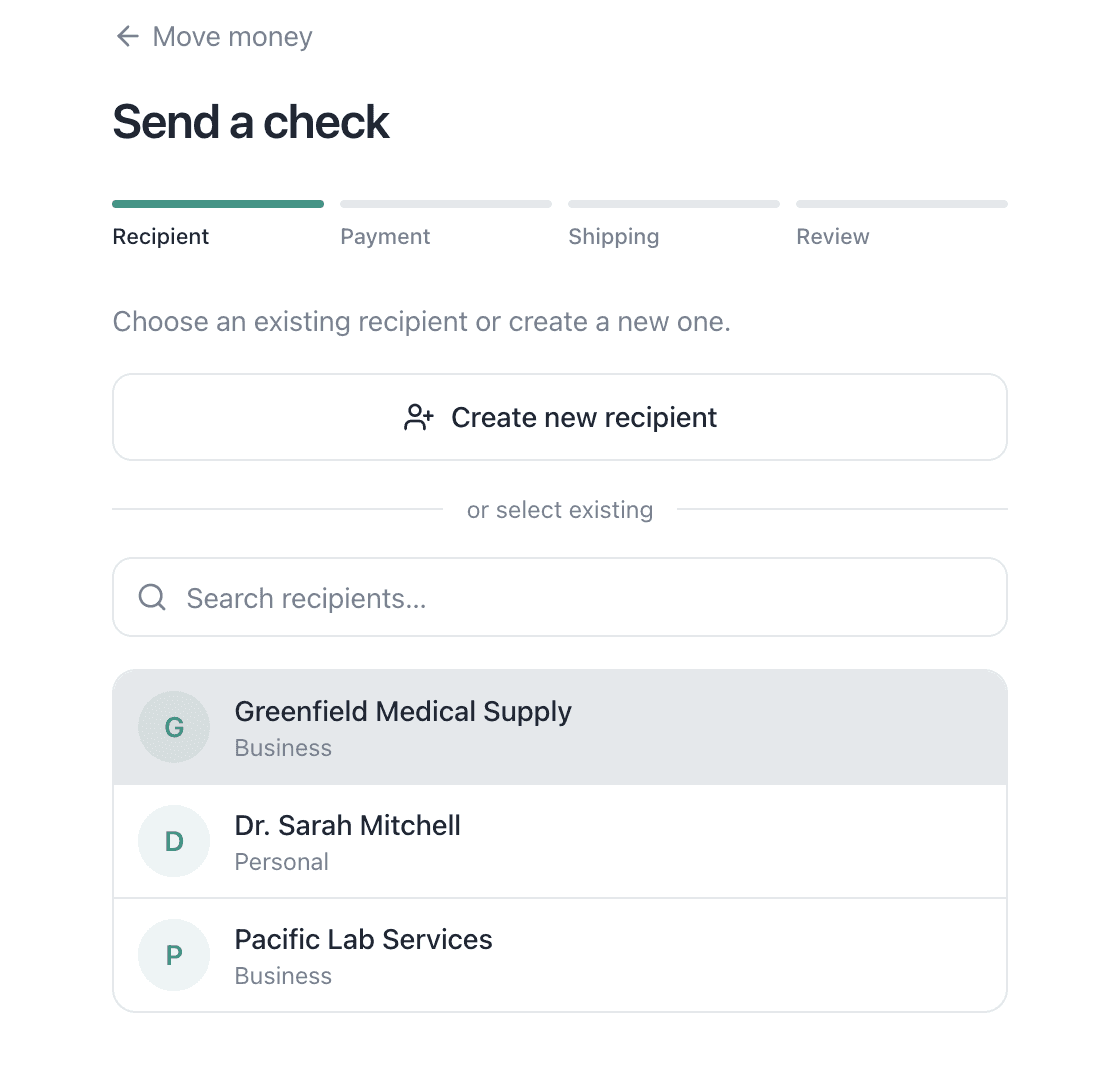
Either pick a saved recipient or click "Create new recipient." Saving patients you've refunded before turns a repeat refund into a one-click action.
2. Enter recipient details
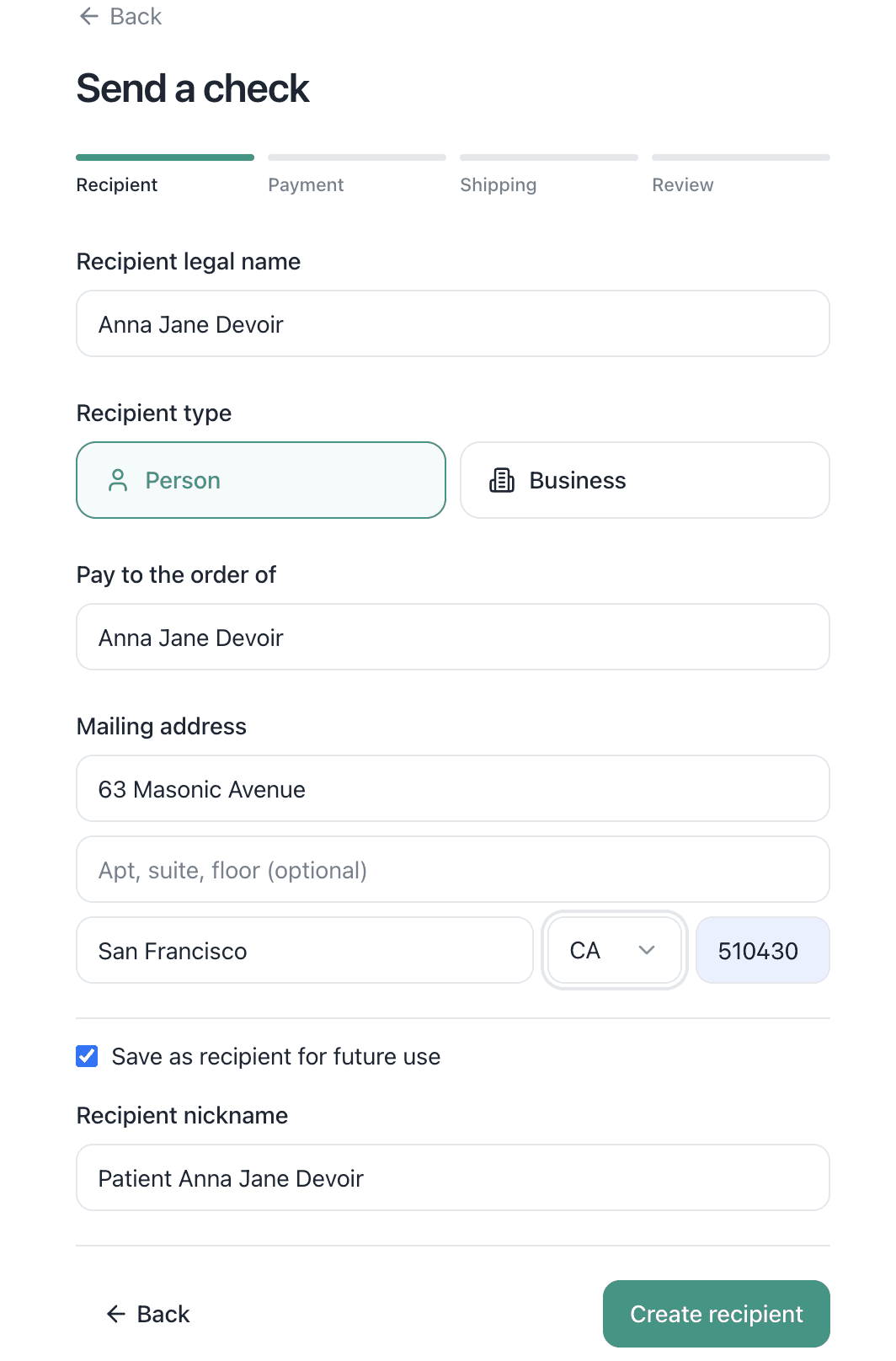
Add the patient's legal name, mailing address, and a nickname like "Patient Anna Jane Devoir" so they're easy to find later. The "Pay to the order of" field controls how the check is made out — set it to match the name on the patient's file, or to the parent or policyholder if that's who actually paid.
3. Set the amount and memo line
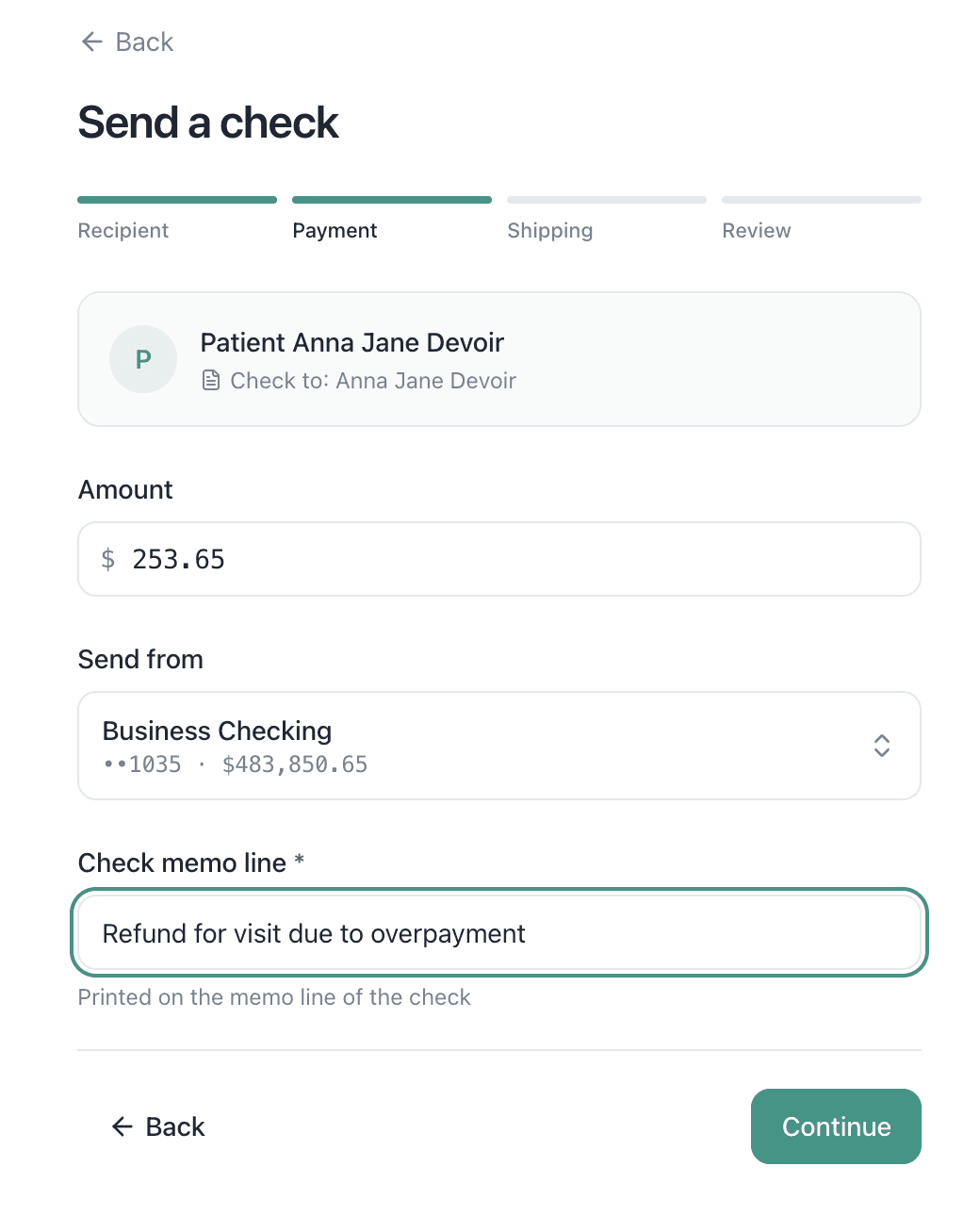
Enter the refund amount and the source account. The memo line — required on Lemma — is where the verification reference goes. "Refund for visit due to overpayment" makes the check immediately recognizable to both your bookkeeper and the patient when it arrives.
4. Choose shipping speed
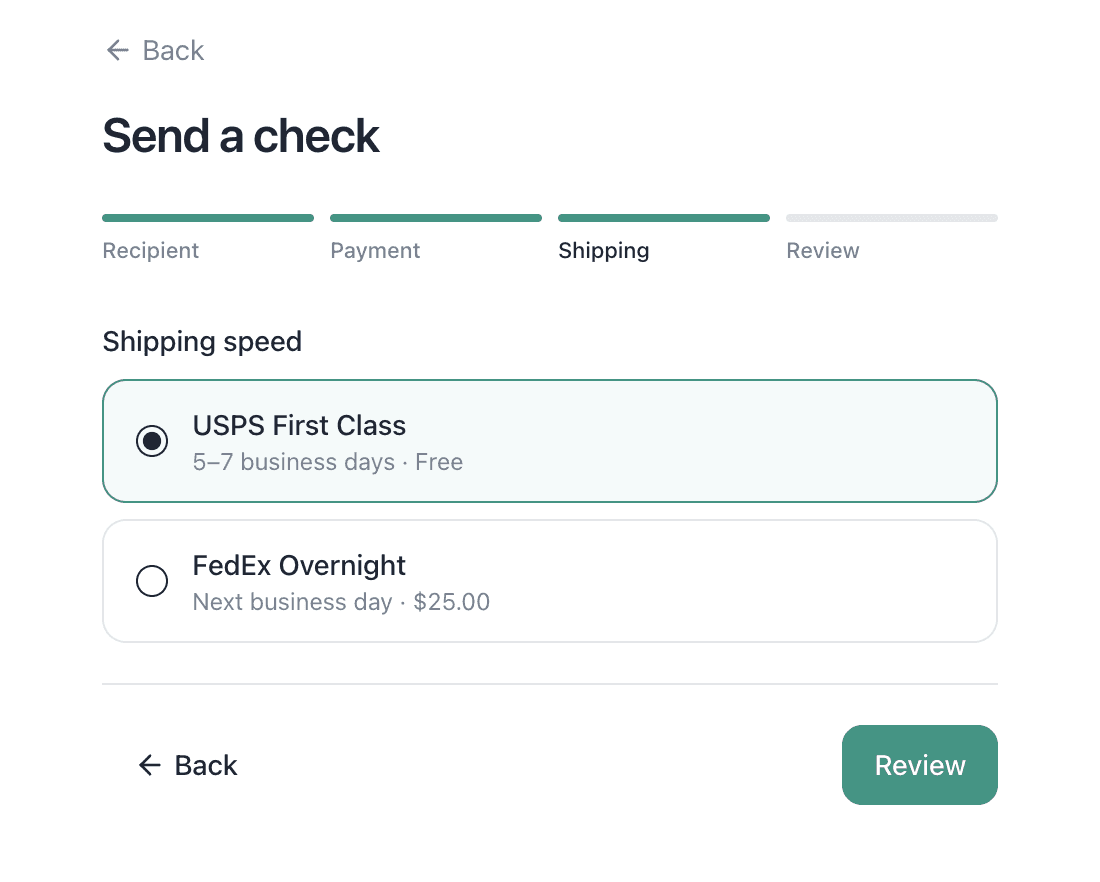
USPS First Class is free and lands in 5–7 business days, which is fine for most refunds. FedEx Overnight at $25 makes sense for larger amounts or when a delay would create patient-relations issues.
5. Review and send
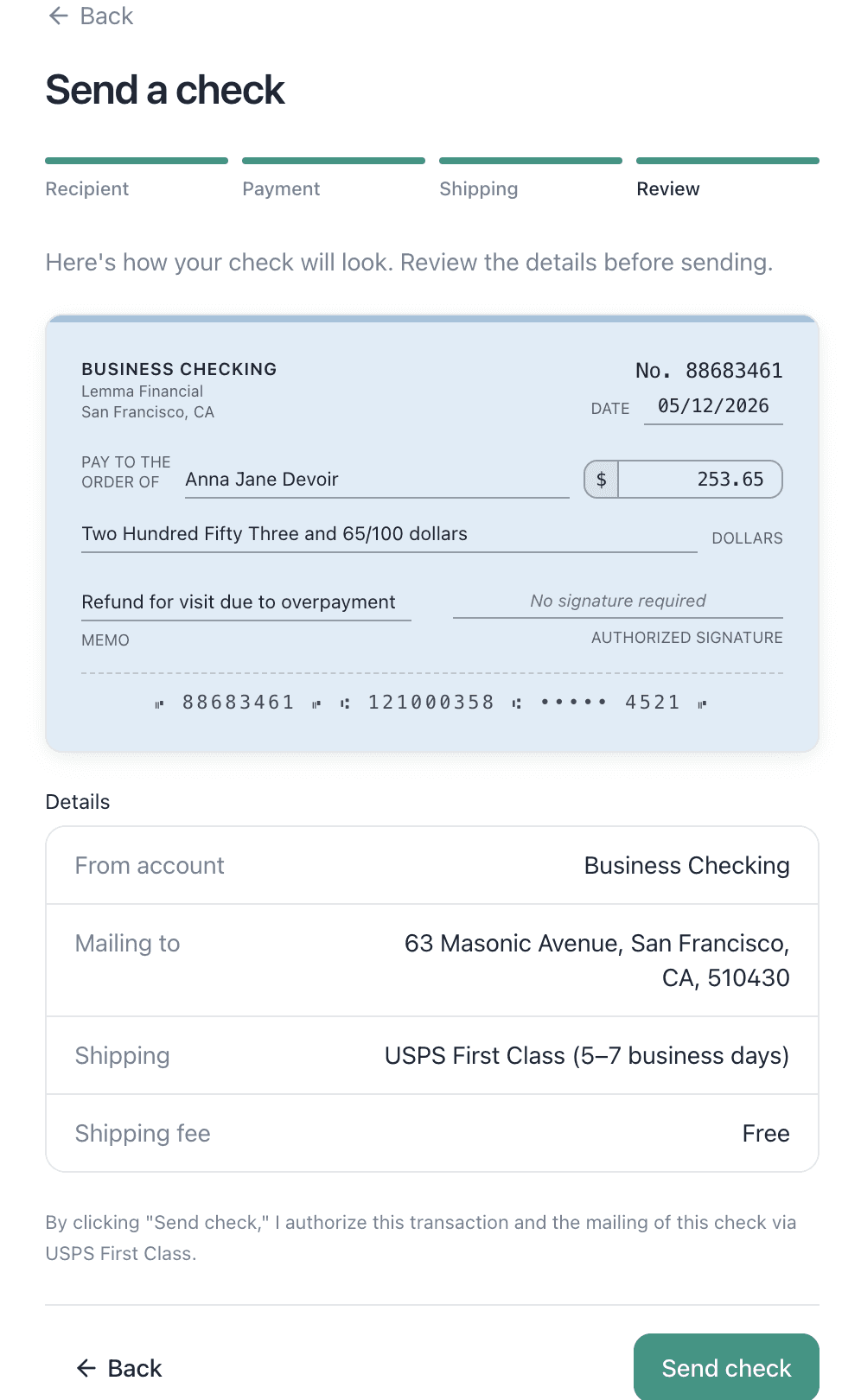
You see a full preview of the printed check including payee name, amount, date, memo, and bank routing details before authorizing. Once you click Send check, Lemma prints, signs, and mails it from a secure facility, and the transaction posts to your account ledger immediately.
The practical wins for clinics:
No checkbook to secure: eliminates the locked-drawer ritual and reduces internal fraud risk.
No signature bottleneck: refunds don't wait for the practice owner to be on-site.
Built-in audit trail: every refund is tied to a specific bank transaction, with patient detail captured in the memo.
Same-day posting by default: the discipline this article recommends is enforced by the system.
Saved recipients: repeat refunds to the same patient take seconds.
Key Takeaways
Confirm the credit balance is real before issuing any refund; claims must be fully adjudicated first.
Refund to the original payment method when possible. Checks are a fallback, not a default.
Require written approval and a refund request form, with higher dollar amounts escalated.
Match the payee to who actually paid, and use the memo line for traceability.
Post the refund in your books the same day the check is issued.
Reconcile uncashed checks monthly and follow up before they go stale-dated at six months.
Keep refund documentation per IRS and HIPAA rules: at least 7 years is a safe default.
Consider digital check services like Lemma to eliminate the manual workflow entirely.
FAQ
Common questions